





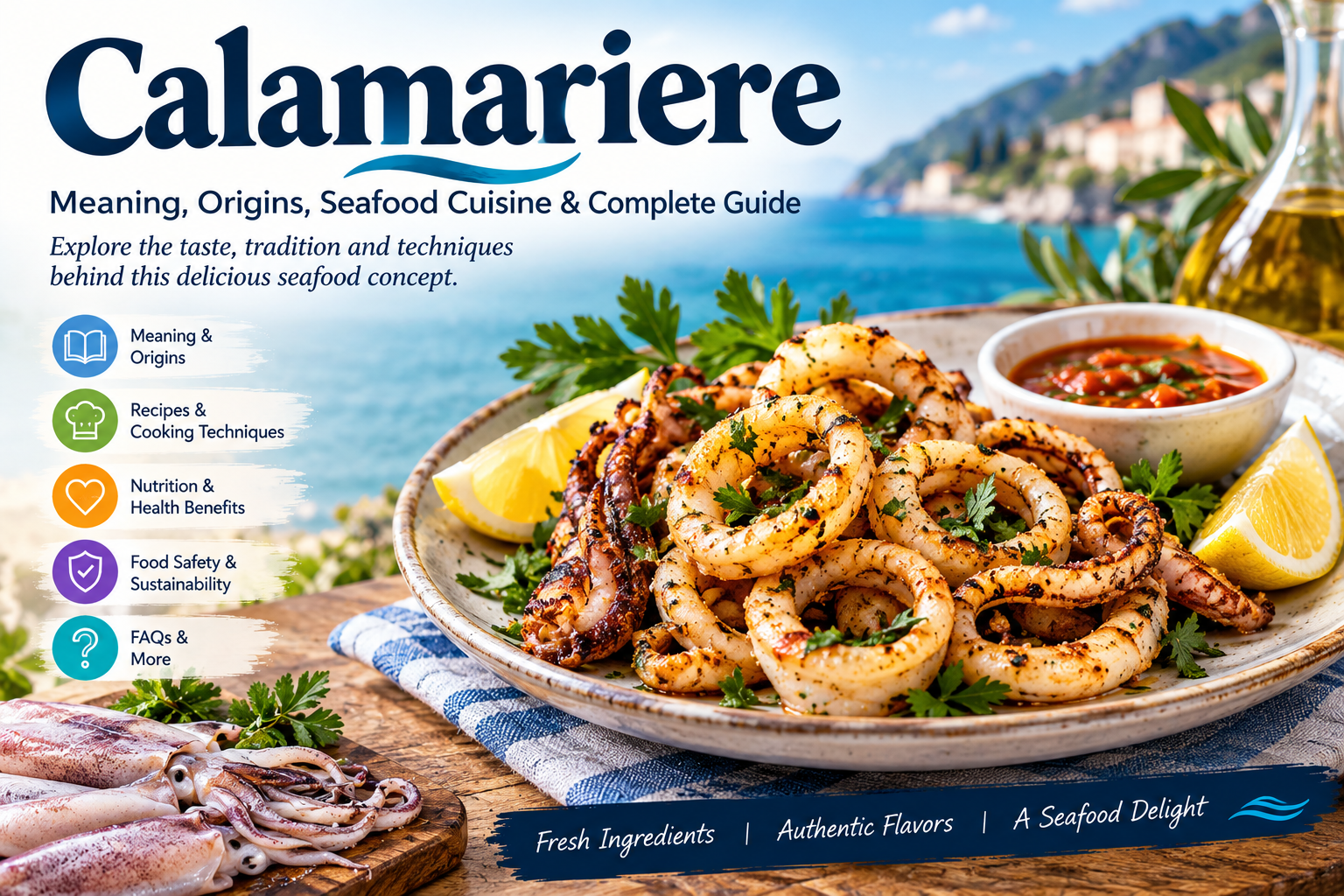
Calamariere: Meaning, Origins, Seafood Cuisine, Cooking Techniques, and Complete Guide Introduction Calamariere is an unusual culinary term that has attracted attention among people interested in seafood, Mediterranean cuisine, and modern food culture. The word sounds Italian and is closely associated with calamari, a familiar seafood ingredient made from squid. However, unlike well-established dishes with documented […]
Calamariere: Meaning, Origins, Seafood Cuisine, Cooking Techniques, and Complete Guide
Introduction
Calamariere is an unusual culinary term that has attracted attention among people interested in seafood, Mediterranean cuisine, and modern food culture. The word sounds Italian and is closely associated with calamari, a familiar seafood ingredient made from squid. However, unlike well-established dishes with documented recipes and traditional names, Calamariere does not have one universally accepted definition in culinary references. Different websites use the term to describe squid-based dishes, creative seafood preparation, or a particular approach to cooking and presenting calamari. This makes it an interesting subject for food enthusiasts who want to understand unfamiliar culinary expressions and explore the traditions behind them. Although the exact origin of the word remains uncertain, its connection with squid provides a useful starting point for understanding the food, ingredients, preparation methods, and cooking ideas associated with it. In this guide, we will explore the meaning of Calamariere, its possible linguistic roots, its relationship with Mediterranean cuisine, popular squid recipes, nutritional considerations, preparation techniques, and its growing presence in online food discussions.
What Is Calamariere?
Calamariere is best understood as an informal, emerging term associated with calamari, squid-based seafood dishes, and creative approaches to seafood preparation. Some online food articles describe it as a Mediterranean-style squid dish, while others use it more broadly to suggest a refined cooking technique or culinary concept. However, there is currently no single standardized recipe that defines every use of the word. This distinction is important because a traditional dish generally has a recognizable preparation method, established ingredients, regional associations, or a documented history. Calamariere does not yet have the same level of consistency as familiar seafood dishes such as calamari fritti or stuffed squid. Therefore, when encountering the word on a restaurant menu, food blog, or social media post, readers should examine the accompanying description to understand what the cook or writer actually means. In practical terms, the term usually points toward squid cuisine, but the ingredients, cooking methods, and presentation may vary considerably.
The Meaning and Possible Origin of Calamariere
The most recognizable part of the word Calamariere is its resemblance to calamari, a term widely used in English-language food culture for squid prepared as food. The Italian singular form is calamaro, while calamari is the plural form commonly seen on restaurant menus. The additional ending in Calamariere gives the word a European or Italian-inspired sound, which may explain why some writers associate it with culinary craftsmanship or a specialist approach to seafood. Nevertheless, the precise creator, historical origin, and original meaning of Calamariere have not been reliably established. It would therefore be misleading to describe it as an ancient Italian expression or claim that it originated in a particular coastal village without supporting evidence. The most reasonable interpretation is that the term is being used creatively in modern online food writing. Understanding this uncertainty helps readers distinguish between established culinary vocabulary and newer expressions that may develop different meanings as people use them.
Calamariere and Mediterranean Seafood Cuisine
Mediterranean seafood traditions provide a useful culinary context for understanding the dishes commonly associated with Calamariere. Countries around the Mediterranean Sea, including Italy, Greece, Spain, and Croatia, have long-standing traditions of preparing squid and other seafood using locally available ingredients. Olive oil, garlic, lemon, tomatoes, parsley, oregano, and other herbs frequently appear in regional seafood recipes, although the exact combinations differ between countries and communities. Squid can be grilled over high heat, fried until crisp, cooked in tomato-based sauces, or combined with vegetables and herbs in a more substantial meal. These preparations demonstrate how a relatively simple ingredient can produce a wide range of flavors and textures. Although Calamariere itself should not be presented as a verified traditional Mediterranean dish, Mediterranean cooking offers inspiration for anyone using the term to describe an imaginative squid preparation. The emphasis on fresh ingredients, balanced seasoning, and appropriate cooking techniques makes this culinary connection understandable without inventing a historical tradition for the word.
Popular Ingredients Associated With Calamariere
The ingredients used in a Calamariere-inspired dish depend on the recipe, but squid is the natural starting point. Fresh or properly frozen squid can be prepared as rings, strips, whole bodies, or stuffed tubes, depending on the desired presentation. Olive oil provides richness, while garlic and onions contribute an aromatic foundation for grilled, sautéed, or simmered preparations. Lemon juice adds acidity and helps balance the natural seafood flavor, while parsley, oregano, black pepper, paprika, and other seasonings can introduce additional aroma and complexity. Some recipes may include tomatoes, olives, capers, or white wine to create a Mediterranean-inspired sauce. For a crisp fried version, flour or breadcrumbs and an appropriate cooking oil may be used. The most important principle is balance: the seasonings should complement the squid rather than overwhelm it. Choosing good-quality ingredients and preparing them correctly generally has a greater influence on the final dish than giving the recipe an unfamiliar or fashionable name.
How to Prepare Squid for Cooking
Preparing squid properly is one of the most important steps in producing a successful seafood dish. When purchasing whole squid, cooks need to clean it carefully, remove the internal contents and transparent cartilage, and separate the edible body and tentacles according to the recipe. The skin can be removed when desired, although whether this is necessary depends on the preparation and personal preference. The cleaned squid should be rinsed with clean water and dried thoroughly before cooking, especially if it will be fried or seared. Excess moisture can interfere with browning and cause hot oil to splatter. If whole squid is unfamiliar to a home cook, buying cleaned squid from a reputable fishmonger can make the process considerably easier. Proper storage is equally important because seafood is perishable and should be kept refrigerated or frozen according to food-safety guidance. Clean preparation surfaces, separate utensils for raw seafood, and thorough handwashing help reduce the risk of cross-contamination.
Important Cooking Techniques for Calamariere
Squid is versatile, but its texture responds strongly to cooking time and temperature. One popular method is quick cooking over high heat, such as grilling or searing, which can produce a lightly browned exterior while keeping the inside tender when handled correctly. Another method is frying, where properly dried and lightly coated squid is cooked until the coating becomes crisp. Squid can also be simmered slowly in a sauce until it becomes tender, making it suitable for stews and tomato-based seafood dishes. The main challenge is avoiding an intermediate cooking period in which squid can become unpleasantly chewy. Quick-cooking methods generally require careful timing, while longer braising methods need enough time for the texture to soften. The size and thickness of the pieces also influence the cooking process. Rather than relying on the word Calamariere to imply one special technique, cooks should follow a tested recipe that explains the temperature, timing, and expected texture for the particular dish they intend to prepare.
Popular Calamariere-Inspired Recipe Ideas
Because Calamariere does not refer to one fixed recipe, it can be used informally to describe several creative squid preparations. One option is lemon-garlic grilled squid, prepared with olive oil, garlic, lemon juice, parsley, and black pepper. Another is crispy fried calamari served with lemon wedges and a tomato-based dipping sauce. A third option is squid simmered with tomatoes, onions, garlic, and herbs, creating a flavorful dish that can be served with bread, rice, or pasta. Stuffed squid is another possibility, with the bodies filled using a suitable mixture of herbs, breadcrumbs, vegetables, and other ingredients before being cooked. For a lighter meal, grilled squid can be combined with fresh vegetables and a simple dressing. These examples illustrate the flexibility of squid cuisine rather than establish an official Calamariere recipe. Anyone creating a dish under this name can make the description clearer by listing the main ingredients and explaining the cooking method, allowing diners to understand exactly what they will receive.
Nutritional Value of Squid
Squid can contribute useful nutrients to a balanced diet. It generally provides protein, which supports the maintenance and repair of body tissues, and contains several vitamins and minerals. Depending on the species and preparation, squid may provide vitamin B12, selenium, phosphorus, and other nutrients. However, the nutritional profile of a finished meal depends on the portion size, accompanying ingredients, and cooking method. Grilled or lightly sautéed squid usually requires less added fat than heavily battered and deep-fried calamari. Salt-heavy sauces and rich accompaniments can also increase the overall sodium or calorie content of a meal. People with seafood allergies must avoid squid if they are allergic to it, and individuals following specific dietary advice should consider their own nutritional requirements. It is also important not to confuse the general nutritional value of squid with unverified health claims attached to a particular food label. Calamariere has no established, unique nutritional profile because it is not one standardized recipe; its nutritional content depends on what the dish actually contains.
Calamariere in Restaurants and Modern Food Presentation
Restaurant presentation can influence how diners experience a seafood dish. Chefs may use careful plating, colorful vegetables, fresh herbs, lemon, and thoughtfully prepared sauces to make squid dishes visually appealing as well as enjoyable to eat. A Calamariere-inspired dish could be presented as a casual seafood appetizer, a grilled main course, or part of a more elaborate tasting menu. The name might also be used creatively for restaurant branding or a signature menu item, but such use would reflect the restaurant’s own interpretation rather than an established culinary definition. For diners, the most useful menu descriptions explain the preparation method, ingredients, portion size, and any common allergens. Clear descriptions are especially important when an unfamiliar word is used because customers should not have to guess whether a dish is fried, grilled, stuffed, or served in a sauce. Good presentation adds value to the dining experience, but flavor, freshness, food safety, and honest menu information remain essential.
Benefits of Exploring Calamariere-Inspired Cooking
Exploring squid-based recipes can introduce home cooks to new flavors, ingredients, and techniques. Squid works well with a variety of seasonings and cooking methods, so it can be adapted to different preferences and meal styles. Someone who enjoys Mediterranean food may prefer lemon, olive oil, and herbs, while another cook might choose a spicy seasoning or a tomato-based preparation. Trying different methods also teaches important cooking skills, including controlling heat, preparing seafood safely, balancing acidity, and understanding texture. In addition, learning about Calamariere demonstrates why food terminology should be researched carefully: a distinctive name can inspire creativity, but the actual recipe determines the ingredients, taste, and nutritional qualities of a dish. Readers should approach unfamiliar culinary labels with curiosity while checking reliable recipes and food-safety information. In this way, exploring the concept can be an opportunity to improve cooking knowledge rather than simply follow an online trend.
Common Mistakes When Preparing Squid
Several mistakes can reduce the quality of squid dishes, regardless of the name used for them. One common problem is overcooking squid during a quick-frying or grilling process, which can make it tough and rubbery. Another is placing wet squid into hot oil, which can cause splattering and prevent the coating from becoming properly crisp. Excessive seasoning may overpower the natural flavor, while insufficient seasoning can make the dish seem bland. Using poor-quality seafood or storing it incorrectly can also compromise flavor and safety. Crowding a pan is another frequent issue because it lowers the cooking temperature and encourages the squid to release moisture rather than brown. To avoid these problems, cooks should prepare the ingredients in advance, follow a tested recipe, cook in manageable batches, and pay attention to the texture as the squid cooks. Learning these fundamentals is more valuable than assuming Calamariere requires a secret technique that has not been clearly documented.
Sustainability and Responsible Seafood Choices
Responsible seafood purchasing is an important consideration for anyone who regularly cooks squid. The environmental impact of squid fishing can vary according to species, location, fishing method, and local management practices. Consumers who want to make more informed choices can ask sellers where the squid was caught, look for credible sustainability information, and consult reputable seafood guides when available. Buying only the quantity needed and storing seafood properly can also reduce household food waste. Restaurants and food businesses can contribute by providing accurate sourcing information and avoiding unsupported claims about the origin of their ingredients. Sustainability cannot be determined simply by calling a dish Calamariere or describing it as Mediterranean-inspired. It depends on the actual seafood species and its supply chain. By considering sourcing alongside flavor and preparation, cooks can enjoy seafood while paying greater attention to environmental responsibility and the long-term health of marine ecosystems.
Is Calamariere a Traditional Italian Dish?
At present, there is insufficient reliable evidence to describe Calamariere as a traditional Italian dish with one established recipe and documented regional history. Recent online sources give the word several overlapping meanings, usually connecting it with squid or a particular style of seafood preparation. This inconsistency suggests that the term is better treated as an informal or emerging expression than as a recognized culinary category. Established Italian squid dishes have clearer names and preparation traditions, including fried calamari, stuffed squid, and squid cooked in a sauce. It is possible for restaurants or food writers to adopt Calamariere as a creative name, but that does not automatically make it an ancient or formally recognized Italian term. Readers who encounter claims about its historical origins should look for dependable culinary references, regional cookbooks, or documented recipes before accepting them as fact.
Frequently Asked Questions About Calamariere
1. What does Calamariere mean?
Calamariere is an uncommon term generally associated online with calamari, squid dishes, and creative seafood preparation. It does not have one universally accepted culinary definition.
2. Is Calamariere a real Italian word?
Its resemblance to Italian culinary vocabulary is clear, but its status as a standard Italian word has not been reliably established. It is safer to describe it as an informal or emerging term.
3. Is Calamariere the same as calamari?
Not exactly. Calamari is the familiar culinary term associated with squid, while Calamariere is an inconsistently used term that some online writers apply to squid dishes or a style of preparation.
4. What ingredients are used in Calamariere?
Ingredients depend on the particular recipe. Squid, olive oil, garlic, lemon, herbs, tomatoes, and seasonings are possible choices for a Mediterranean-inspired preparation.
5. Is Calamariere healthy?
Its nutritional value depends on the ingredients and cooking method. Squid provides protein and several nutrients, while deep-frying, rich sauces, and added salt can change the nutritional profile.
6. How can squid be cooked without becoming rubbery?
Quick-cooking methods require high heat and careful timing, while longer simmering methods need sufficient time for the squid to become tender. A reliable recipe should specify the method and cooking time.
7. Can Calamariere be prepared at home?
Yes. Home cooks can prepare squid using familiar grilling, frying, sautéing, or simmering methods. The term itself does not require a special piece of equipment or a single mandatory recipe.
8. Where did Calamariere originate?
Its precise origin has not been reliably documented. The word appears to be associated with calamari, but claims that it began in a particular region or historical period require stronger evidence.
9. Does Calamariere have a standard recipe?
No single standardized recipe has been established. Different websites use the term in different ways, so the ingredients and cooking method should be checked in each recipe.
10. Why is Calamariere appearing online?
Unusual food terms can attract curiosity and search interest. Online articles and creative food descriptions may introduce or popularize expressions before their meanings become consistent.
Conclusion
Calamariere is an intriguing food-related term that connects modern online discussions with the familiar world of squid and seafood cuisine. Although some websites describe it as a Mediterranean squid dish or a refined approach to cooking calamari, the word does not currently have one universally recognized culinary definition or a clearly documented traditional history. Its practical value lies in the ideas it can inspire: preparing fresh squid carefully, experimenting with herbs and seasonings, exploring different cooking techniques, and presenting seafood in an appealing way. Mediterranean culinary traditions offer many useful examples, from grilled squid with lemon and olive oil to fried calamari and squid simmered in tomato sauce, but these established preparations should not be confused with proof of a historical Calamariere tradition. Anyone interested in the term should focus on reliable recipes, safe seafood handling, balanced ingredients, and responsible sourcing. By understanding both the culinary possibilities and the uncertainty surrounding the name, readers can explore Calamariere with curiosity while making informed decisions about the food they prepare, order, and enjoy.